Building a Digital Platform for Pizza Education
Designing, Developing, and Growing an eCommerce Brand From the Ground Up
Client: The Best Pizza Shop
Tools: Figma, HTML, CSS, JavaScript, PHP, Google Analytics, Google Search Console, YouTube Studio, Adobe Illustrator, Adobe Photoshop
Role: Product Strategy, UX Design, Front-End Development, Branding, SEO, Content Strategy, and Digital Marketing
Timeline: April 2025–Present
The Context
Pizza education is spread across disconnected YouTube videos, recipe blogs, Facebook groups, forums, and social media accounts. Finding reliable information often requires jumping between multiple sources, making it difficult for home pizza makers to understand which techniques, ingredients, and equipment will actually improve their results.
After more than 20 years designing websites and digital products, I wanted to apply the same product thinking to a subject I had spent just as long studying: pizza. Rather than simply launching another YouTube channel, I set out to build a complete digital platform that could connect educational content, recipes, product recommendations, coaching, community outreach, and eCommerce within one cohesive customer experience.
The result became The Best Pizza Shop, a digital education brand designed to help people make better pizza at home while building a sustainable business around useful content, trusted recommendations, and community impact.
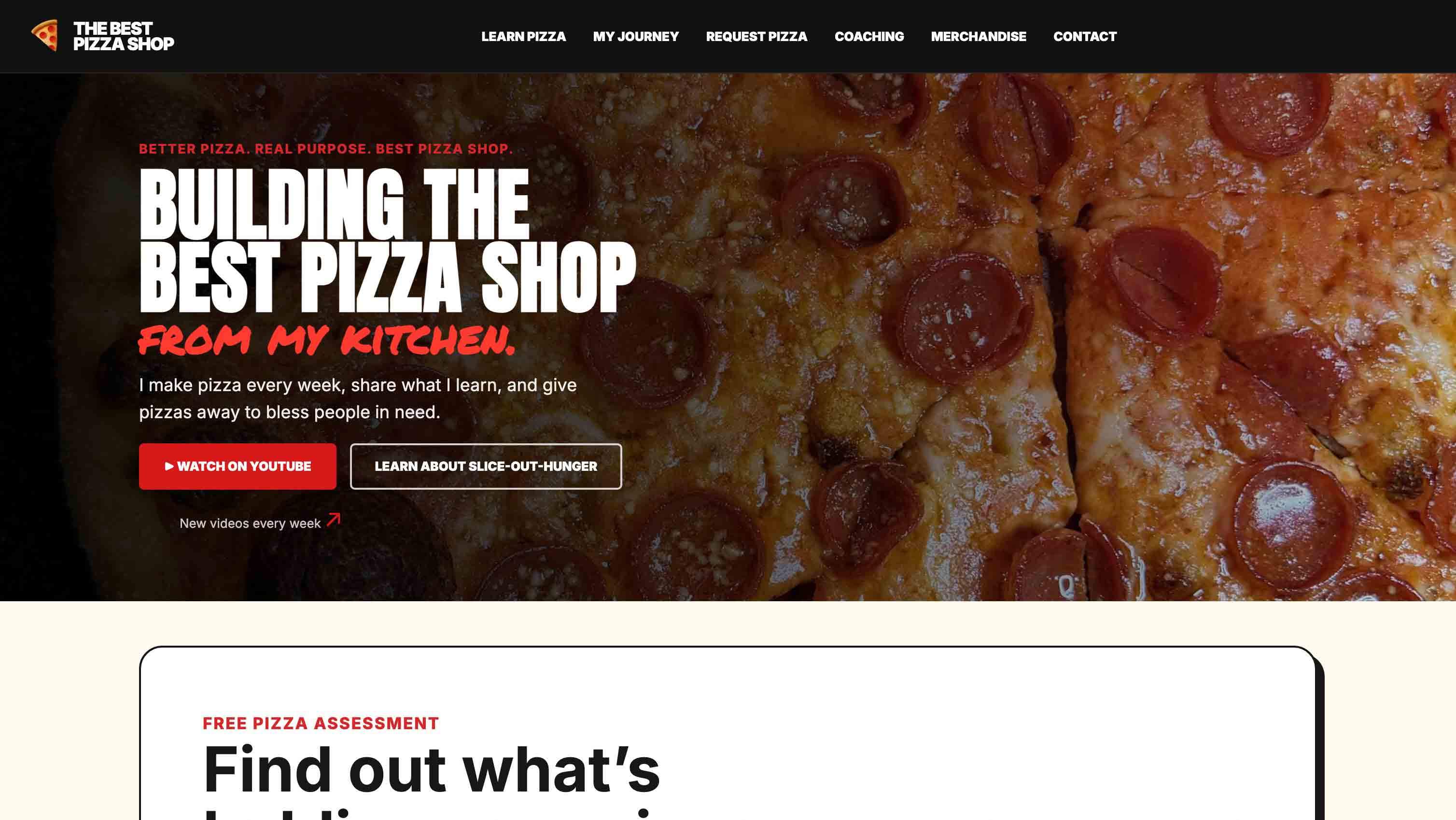
The Best Pizza Shop combines education, product recommendations, video content, coaching, merchandise, and community outreach within one responsive digital platform.
The Challenge
Building the platform required solving several connected product, design, technical, and business challenges at the same time.
-
Education: Organize a broad range of pizza-making topics into a structure that could support both beginners and experienced home pizza makers.
-
Content Discovery: Connect long-form videos with written recipes, equipment recommendations, ingredients, and supporting educational resources.
-
eCommerce: Introduce affiliate products, merchandise, and coaching services without compromising the educational value or trustworthiness of the experience.
-
Marketing: Create landing pages and content experiences that could support audience growth, lead generation, partnerships, and conversion.
-
SEO: Build a content architecture capable of attracting organic search traffic across recipes, pizza styles, techniques, ingredients, and equipment.
-
Scalability: Establish reusable components and page structures that would allow the website to grow without creating an inconsistent or difficult-to-maintain experience.
-
Community Impact: Support a charitable pizza request program while clearly distinguishing free community outreach from paid products and services.
Unlike an internal enterprise product, every design and implementation decision directly affected audience growth, customer trust, business performance, and the ability to support the project’s charitable mission.
My Approach
-
Competitive Research: Evaluated pizza education websites, recipe platforms, creator businesses, product-review sites, and YouTube channels to understand common patterns and unmet user needs.
-
Information Architecture: Organized recipes, educational topics, videos, products, services, and community programs into a structure that could scale as the platform grew.
-
Product Strategy: Defined how content, affiliate recommendations, coaching, merchandise, and community outreach could work together as one connected ecosystem.
-
Experience Design: Created user flows, wireframes, responsive layouts, reusable interface patterns, and conversion paths across desktop and mobile.
-
Front-End Development: Designed and implemented the platform using HTML, CSS, JavaScript, PHP, responsive design practices, and reusable content components.
-
SEO and Accessibility: Developed metadata, structured data, semantic page architecture, responsive behavior, and accessibility improvements across the site.
-
Continuous Improvement: Used customer feedback, content performance, analytics, search data, and real-world use to prioritize features and refine the experience.
The Solution
Rather than creating a traditional marketing website, I designed and developed a connected digital product ecosystem. Each section serves a distinct customer need while contributing to the broader educational and business strategy.
-
Educational Learning Center: Structured content around dough, pizza styles, techniques, equipment, ingredients, and common problems.
-
Recipes and Tutorials: Created detailed recipe pages that translate video content into searchable, reusable written resources.
-
Pizza Assessment: Built an interactive experience that helps users identify areas where their pizza-making process can improve.
-
Video Library: Integrated long-form YouTube content into the website to connect video discovery with related recipes and resources.
-
Equipment and Ingredient Recommendations: Designed reusable product cards and content structures for trusted gear, ingredients, and affiliate recommendations.
-
Coaching Services: Created a dedicated experience for users seeking one-on-one pizza-making guidance.
-
Merchandise: Connected branded products to the broader mission of supporting educational content and community pizza outreach.
-
Pizza Request Program: Built a request experience that allows people to nominate themselves, their families, or others to receive pizza.
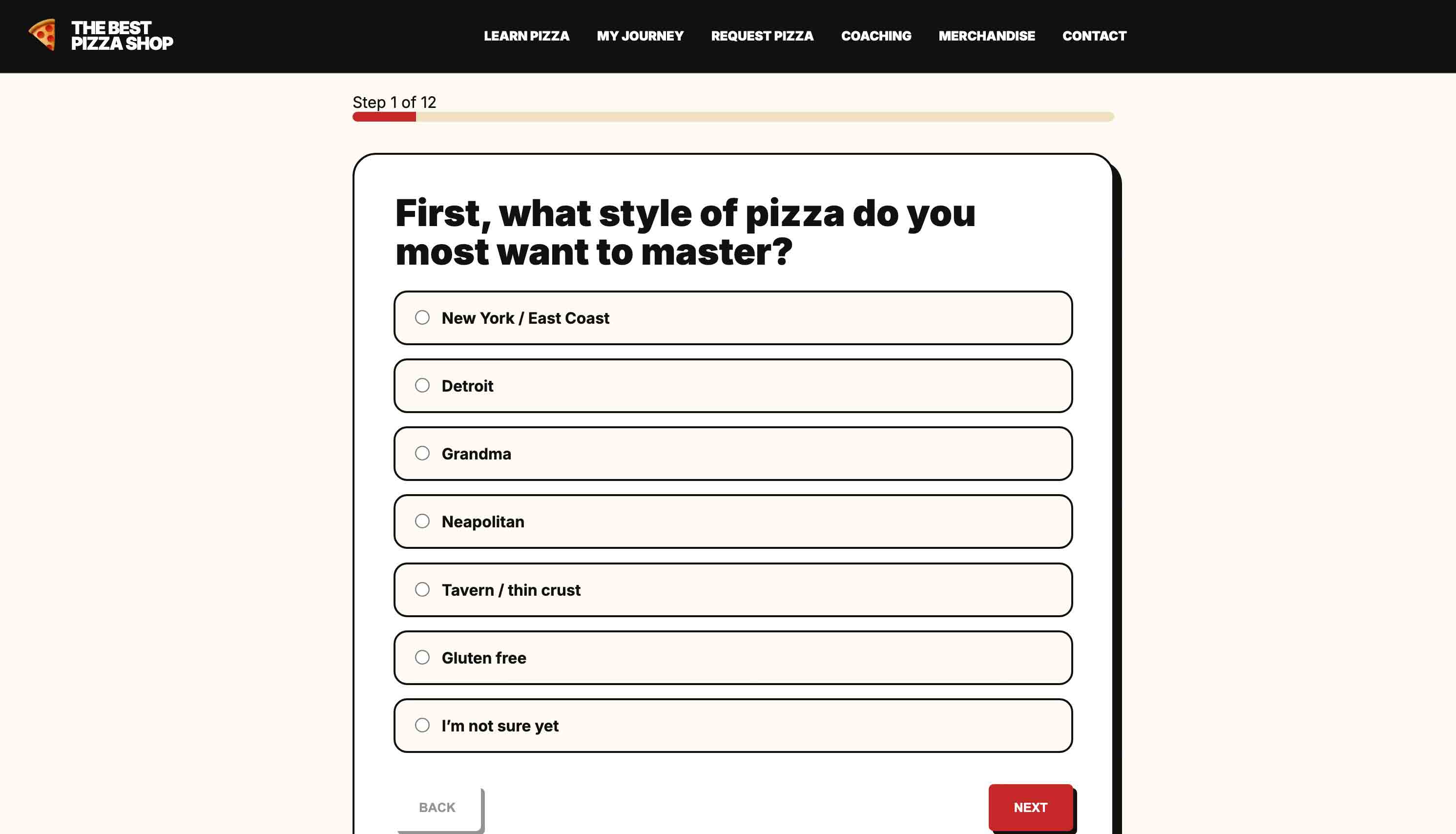
The interactive assessment turns a broad learning problem into a personalized experience by helping users identify strengths, weaknesses, and practical areas for improvement.
Front-End Development
I designed and implemented the website directly, allowing design decisions to be evaluated not only for visual quality, but also for technical feasibility, accessibility, responsiveness, performance, and maintainability.
-
Responsive Architecture: Built flexible layouts that adapt across desktop, tablet, and mobile devices.
-
Reusable Components: Created repeatable patterns for cards, navigation, calls to action, recipes, product recommendations, FAQs, and content sections.
-
Custom JavaScript: Developed interactive navigation, assessments, animations, dynamic content loading, and progressive interface behaviors.
-
PHP and Content Integration: Used reusable includes and lightweight endpoints to support shared page elements and dynamic content.
-
YouTube Integration: Connected the website to the channel’s video feed so new long-form content can be displayed throughout the platform.
-
Accessibility: Used semantic HTML, responsive controls, alternative text, keyboard-conscious interactions, and WCAG-informed design practices.
-
Performance: Optimized image behavior, reusable code, page structure, and content loading to support a faster customer experience.
Marketing and Growth
The website was designed as the center of a broader content and marketing ecosystem. Rather than relying on paid advertising, the strategy focuses on earning trust through useful educational content and connecting that content to relevant products, services, and opportunities.
-
YouTube: Produce long-form educational videos, Shorts, tutorials, product reviews, experiments, and behind-the-scenes content.
-
Search Engine Optimization: Create search-focused learning pages, recipes, metadata, structured data, and internal linking strategies.
-
Social Media: Develop supporting content, campaigns, announcements, and calls to action across social platforms.
-
Affiliate Marketing: Connect trusted product recommendations with relevant educational content and customer needs.
-
Brand Partnerships: Build relationships with ingredient suppliers, equipment manufacturers, and food brands through authentic product use and content collaboration.
-
Coaching and Services: Convert educational trust into personalized one-on-one guidance for users who need more direct support.
-
Merchandise: Use branded products to strengthen community identity and financially support future educational and charitable work.
Community and Brand Purpose
The Best Pizza Shop is not only an educational and commercial platform. A central part of the brand is using pizza to serve people within the community.
The website includes a pizza request form where visitors can request pizzas for themselves, their families, or someone they believe could use encouragement. When a request is for someone in need, the pizza is provided at no cost and without requiring the recipient to justify their circumstances.
This mission influenced the product strategy and business model. Affiliate revenue, merchandise, coaching, sponsorships, and audience growth are not treated as isolated revenue streams. They help support the continued creation of free educational content and the ability to provide pizzas to others.
Impact
-
End-to-End Product Ownership: Took the platform from initial concept through strategy, design, front-end implementation, launch, marketing, and ongoing iteration.
-
Scalable Digital Platform: Built a flexible content system capable of supporting recipes, videos, educational guides, assessments, products, services, and community programs.
-
Audience Growth: Created an expanding content ecosystem that reaches thousands of pizza enthusiasts through YouTube, social media, and the website.
-
Organic Discovery: Established a technical and content foundation for growing search visibility through metadata, structured data, educational content, and internal linking.
-
Revenue Opportunities: Developed multiple potential revenue streams through affiliate partnerships, sponsorships, merchandise, coaching, and digital content.
-
Brand Partnerships: Created opportunities to collaborate with pizza ingredient suppliers, equipment brands, and restaurant-industry companies.
-
Community Support: Built a digital experience that supports the ongoing distribution of pizzas to individuals and families within the community.
Reflection
One of the most valuable aspects of this project has been applying enterprise product-design principles to a small business where every decision has an immediate and visible effect.
In a traditional enterprise environment, design, development, content, marketing, analytics, and business strategy are often owned by separate teams. Building The Best Pizza Shop required me to connect all of those disciplines and make decisions with the complete customer and business experience in mind.
The project strengthened my ability to move between strategy and execution, communicate across disciplines, prioritize limited resources, guide front-end quality, and connect day-to-day product decisions to broader business outcomes.
It also reinforced an important principle: the strongest digital experiences are not created by treating design, technology, marketing, and content as separate functions. They are created by aligning those disciplines around a clear customer need and a shared purpose.
Next Steps
The Best Pizza Shop continues to evolve as its audience, content library, partnerships, and community programs grow. Future work includes expanding educational learning paths, improving personalization, developing additional assessment tools, strengthening analytics, growing organic search traffic, and creating new ways for content, commerce, and community support to reinforce one another.
View Next Case Study