Human-Centered Design (HCD) is an approach to problem-solving that puts people first. It means designing products, services, workflows, and digital experiences based on the needs, behaviors, and feedback of the people who use them.
But modern digital experiences also need to be understandable to more than human visitors. Search engines, AI assistants, voice interfaces, and conversational discovery tools increasingly interpret your content, structure, services, credibility, and public business signals.
That makes clarity a competitive advantage. Strong UX, accessible content, structured data, clear service pages, and consistent entity signals can help your business become easier to find, easier to understand, and easier to recommend.
Human-centered design was formalized by design experts like Don Norman, who introduced the term in his book The Design of Everyday Things. HCD has since been adopted by organizations worldwide, including IDEO and the Stanford d.school, as a foundation for innovation and user-friendly design.
Learn more:
Most teams struggle to bridge the gap between business goals, user needs, operational complexity, and digital discoverability. I help organizations cut through that complexity, identify the right opportunities, and design solutions that are easier for both people and modern search systems to understand.
Whether you’re looking to streamline operations, improve customer experiences, validate a product direction, or make your website more visible in AI and voice search, I bring a human-centered approach rooted in research, strategy, structure, and measurable outcomes.
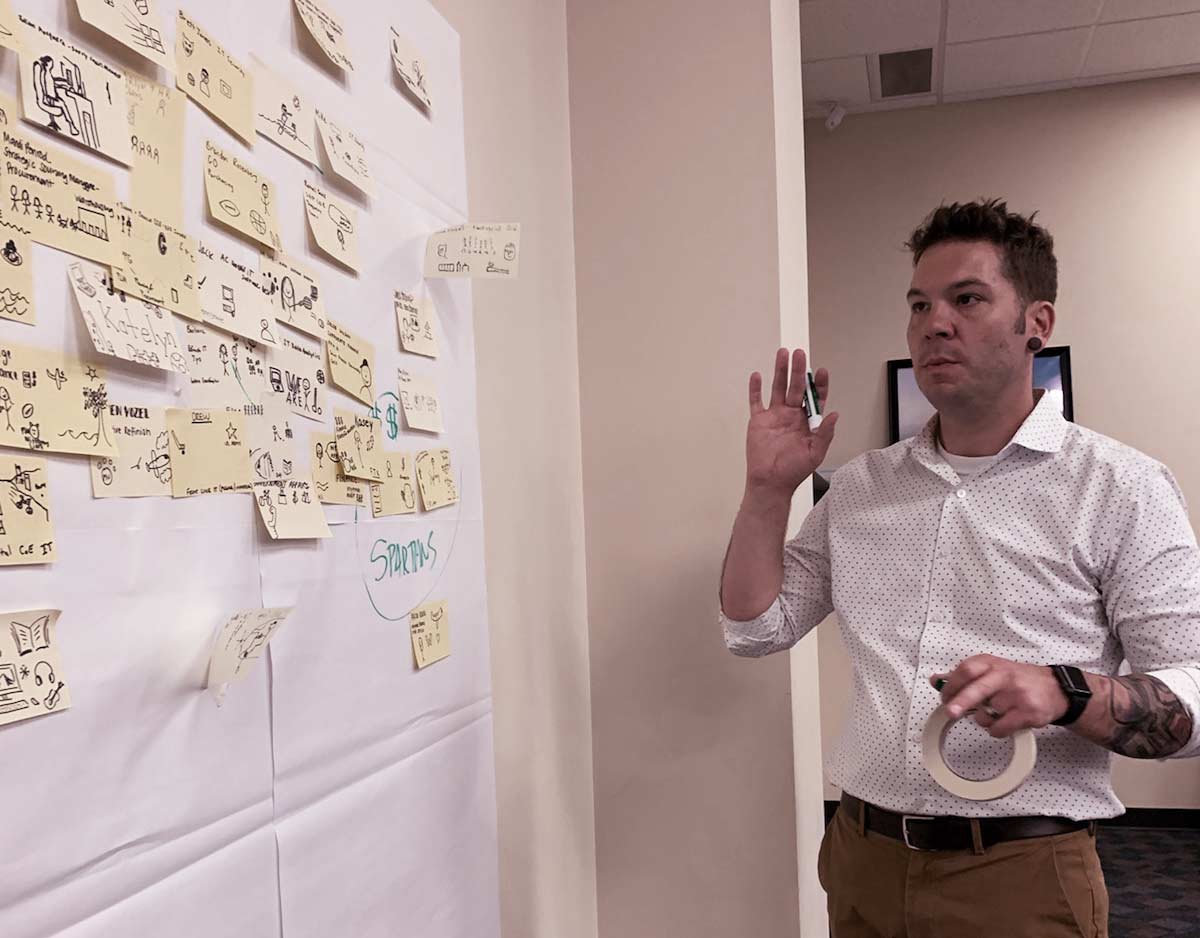
Transforming ideas into action—facilitating a fast-paced design thinking session where collaboration turns sticky notes into innovation. Rapid insights, big impact.
Uncover the real challenges before jumping to solutions.
Turn insights into actionable, high-impact solutions.
Ensure long-term impact through scalable strategies and design-driven execution.
Modern digital experiences are increasingly interpreted by both human users and machine systems. Google, ChatGPT, Gemini, Siri, Alexa, and other discovery tools look for clear entities, structured information, useful answers, consistent business signals, and credible proof.
That does not replace good UX. It makes good UX even more important. If your site is confusing to a person, it may also be confusing to the systems trying to understand, summarize, or recommend it.
My approach connects human-centered design, information architecture, accessibility, structured data, and content clarity to help businesses become easier to find, easier to trust, and easier to act on.
The Wiz Design approaches websites as business tools, not just visual projects. Every engagement considers user experience (UX), search engine optimization (SEO), conversion strategy, information architecture, accessibility, mobile responsiveness, page speed, and AI search discoverability. The goal is to create digital experiences that help businesses build trust, generate leads, and support long-term growth.
No. Visual design is only one part of the process. The Wiz Design also works on UX strategy, user flows, technical SEO, performance optimization, content structure, schema markup, conversion-focused layouts, accessibility improvements, and front-end development. Strong websites require both strategic thinking and technical execution.
The Wiz Design works across industries including industrial automation, manufacturing, financial services, SaaS, local businesses, service companies, content creators, and e-commerce brands. Experience designing for highly regulated enterprise environments also influences the level of detail, usability, and strategic thinking applied to smaller business websites.
User experience design helps visitors quickly understand what a business does, why it matters, and how to take action. A well-structured UX strategy can improve engagement, reduce confusion, increase trust, improve conversion rates, and help search engines better understand site content.
Yes. Website performance directly affects user experience, SEO rankings, accessibility, and conversion rates. Slow websites increase bounce rates and reduce trust. The Wiz Design prioritizes image optimization, efficient front-end development, Core Web Vitals improvements, reduced layout shifts, and mobile-first performance optimization.
AI search optimization focuses on helping websites become understandable and trustworthy to AI-powered search systems and answer engines. This includes improving content structure, semantic clarity, FAQ content, schema markup, technical SEO, internal linking, topical authority, and clear entity relationships.
Yes. SEO considerations are integrated into the website structure from the beginning of the project, not added afterward. This includes page hierarchy, heading structure, metadata strategy, internal linking, crawlability, mobile usability, page speed, structured data, keyword targeting, and content organization.
Yes. Many businesses already have websites that can be improved through UX audits, SEO improvements, redesigns, performance optimization, accessibility enhancements, content restructuring, or conversion-focused updates. In many cases, improving an existing site is more cost-effective than rebuilding from scratch.
Accessibility is an important part of modern digital experiences. The Wiz Design incorporates accessibility-minded design practices including readable typography, color contrast considerations, keyboard-friendly structures, semantic HTML, and usability improvements.
Search engines and AI systems rely on structured, well-organized content to understand websites. Clear headings, semantic page structure, FAQs, descriptive service pages, schema markup, and logically organized information improve discoverability and help search systems interpret business expertise and relevance.
The Wiz Design works with both small businesses and larger organizations. Enterprise-level UX and product design experience influences the strategic approach used for businesses of all sizes, whether building a local service company website or supporting more complex digital ecosystems.
The Wiz Design works with modern web technologies and tools including HTML, CSS, JavaScript, PHP, responsive frameworks, CMS platforms, Figma, SEO tooling, schema markup, analytics platforms, performance optimization tools, and front-end development workflows.
Mobile-first thinking is a core part of the design process. Websites are designed to work effectively across phones, tablets, laptops, and desktop screens. Mobile usability impacts SEO rankings, accessibility, and conversions, making responsive design critical for modern websites.
Yes. Website credibility is influenced by visual polish, messaging clarity, performance, SEO signals, consistent branding, structured content, social proof, trust indicators, and overall user experience. The Wiz Design focuses on helping businesses present themselves as professional and trustworthy online.
Frequently asked questions help websites address real-world user intent directly. FAQs can improve topical relevance, increase long-tail keyword coverage, strengthen semantic understanding, and provide AI systems with clearer contextual information about services, industries, and expertise.
Don’t start with a solution—start with a challenge.
If your team is struggling with low adoption, inefficient workflows, unclear product direction, weak digital visibility, or a lack of clarity on what to build next, I can help. Let’s talk.